In conversation with Ricardo Treviño - key insights and takeaways
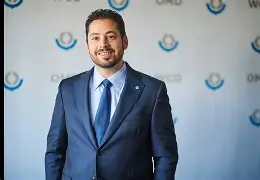
On 10 September 2026, the Centre for Customs and Excise Studies (CCES) and International Network of Customs Universities (INCU) co-hosted a webinar with Ricardo Treviño Chapa, the Deputy Secretary General of the World Customs Organization (WCO).
This webinar brought Ricardo into conversation with Professor David Widdowson to discuss the WCO’s forward priorities, and its broader vision for reform and modernisation across the international customs landscape.
The key takeaways are outlined below.
1. Modernisation is about agility, flexibility, and impact.
For the WCO, modernisation isn’t a fixed destination so much as an ongoing capacity to stay agile, flexible, and relevant both to its Members and to the societies its Members serve. The end goal is about making sure customs administrations can continue to have a positive, tangible impact on their own stakeholders as the environment around them keeps shifting.
What makes this achievable at a global scale, Ricardo argued, is something the WCO is uniquely placed to do: foster cooperation across three distinct layers Customs to-Customs collaboration between administrations, Customs-to-other-border-agencies coordination, and Customs-to-external-stakeholder partnerships with academia and industry.
No single administration can build this web of relationships alone, which is precisely the WCO’s value as a convenor. This matters because trust between administrations, between Customs and other agencies, and between Customs and the private sector is the foundation for operating effectively in an increasingly complex strategic environment, where organised crime and illicit trade are becoming more sophisticated and harder to counter in isolation.
2. There is a visibility gap between what Customs does and what the public understands.
There is somewhat of a disconnect between the sheer breadth of Customs’ role in global trade and public awareness of it. Customs is a strategic advisor to governments and sits behind nearly every major disruption and reform of the past two decades, from the post-9/11 push on supply chain security and organized crime, through WTO Trade Facilitation Agreement implementation, to Brexit border realignment and COVID-19, where Customs was central to moving strategic goods like vaccines while also combating counterfeit and substandard medical products entering supply chains.
3. AI’s pace is outstripping regulation and reshaping what Customs officers need to know.
AI is evolving faster than most administrations can regulate it. Some countries have moved early to put frameworks in place, while many others have yet to catch up, leaving a patchwork of maturity across the WCO’s 187 Members. Classification emerged as a particular area of concern. There are numerous AI powered tools on the market to help Customs classify goods, but accuracy still isn’t where it needs to be, and mistakes persist in a function where precision has direct revenue and compliance consequences.
Ricardo sees a clear role for the WCO in setting standards in relation to the use of AI. The organization periodically publishes its Disruptive Technologies report, and its committee structure exists precisely to review emerging best practice, draft standards, and roll out compendiums and capacity-building initiatives. He also floated using AI itself as a tool to help the WCO analyse practices and build best practice standards.
For customs officers, the shift is as much about mindset as skillset: critical thinking, stronger data analysis capability, particularly when managing sensitive data, ethical conduct, and curiosity in how AI tools are applied. Ricardo was direct about the risk of overreliance. AI is a significant part of the solution, but it can’t replace the judgement, scrutiny, and ethical grounding that officers bring to the role.
4. Data as “the new gold” but capability and legal frameworks still to catch up.
Customs sits on genuinely unique and valuable data sources tied to global freight operations that few other institutions can access at that scale. The WCO’s current focus is on getting the fundamentals right, building the right systems and mechanisms to collect that data consistently across Members but he was candid that even where data is being collected, it isn’t yet being used to anywhere near its full potential. The gap isn’t really about the value of the data; it’s about capability and infrastructure to turn it into something usable.
The bigger barrier currently is legal rather than technical. Outdated or misaligned legal frameworks remain a significant obstacle to how the WCO and its Members can collect, share, and analyse data, particularly across borders. Ricardo sees this as an area where the WCO has a distinct role to play, not just facilitating cooperation on data and intelligence sharing itself but helping build the legal frameworks that make that sharing possible in the first place and pushing to improve the overall quality of the data being shared, not simply its volume.
5. From a top-down list of priorities to a consultative-based planning process.
The WCO’s strategic planning process itself has evolved significantly. Historically it was top-down and expansive, with plans running to well over a hundred objectives. Labeling something a “priority” implicitly meant deprioritizing something else, which proved politically difficult across 187 Members at very different stages of development.
Over successive cycles, the WCO shifted from “priorities” to “focus areas”, allowing it to concentrate effort without officially sidelining anything else. This reflects necessity as much as design: as Customs’ visibility and mandate have grown into supply chain security, environmental protection and e-commerce, the demands on administrations have multiplied even as its core objectives of facilitation, revenue collection, and protection of society, have remained unchanged.
What’s changed is the process behind the plan: three year planning cycles, broader regional consultation, a PESTLE analysis to understand the opportunities and challenges in the wider environment, and a sharper discipline around asking Members what matters most for them. The WCO have invested in helping Members use finite resources more efficiently against a workload that keeps growing.